Reinsurance, War Risk, and the Hidden Financial System Behind Shipping
Behind every insurance policy lies another layer of protection called reinsurance. Reinsurance allows insurers to share risk and handle extremely large policies.
Without reinsurance, many marine insurance contracts would be impossible to issue.
What Is Reinsurance?
Reinsurance is essentially insurance for insurance companies. It allows insurers to:
- Spread large risks across multiple parties.
- Protect themselves from catastrophic claims.
- Offer coverage for extremely valuable assets like oil tankers.
But this system also creates dependency. When reinsurers withdraw, the entire insurance market tightens, and the effects cascade rapidly through global shipping.
The GIC Re Example
India's state-owned reinsurer GIC Re recently withdrew marine war-risk coverage from multiple high-risk areas, including:
- The Persian Gulf
- The Gulf of Oman
- Parts of the Indian Ocean
Ships entering these areas after the cutoff date could face a breach of warranty, which automatically invalidates insurance coverage.
This triggered a chain reaction across global shipping, as insurers who relied on GIC Re for reinsurance capacity were forced to cancel or restrict their own policies.
The Global Trade Chain Reaction
When reinsurance capacity shrinks, a predictable sequence of events follows:
- Insurers cancel policies or refuse new coverage.
- Ship owners avoid risky routes.
- Charter contracts fail due to lack of insurance.
- Banks refuse trade financing without valid coverage.
- Ships pile up outside conflict zones, unable to move.
- Freight rates surge due to reduced vessel availability.
- Commodity prices rise as supply chains tighten.
This self-reinforcing cycle increases uncertainty and reduces shipping capacity at a time when global markets need stability.
Historical Precedents
This pattern has appeared before in global shipping.
During the Iran-Iraq Tanker War in the 1980s, attacks on tankers caused insurance premiums to surge dramatically. Ship owners faced enormous costs to transit the Persian Gulf, and many vessels were rerouted or taken out of service.
Similarly, during the 2023 Red Sea attacks, many vessels rerouted around the Cape of Good Hope, adding weeks to voyages and increasing costs significantly. The insurance market responded by expanding the Joint War Committee's listed areas, which triggered additional premium requirements for vessels in the region.
Government Intervention
To stabilize shipping during geopolitical crises, proposals have emerged for government-backed insurance programs. Several countries have explored or implemented sovereign war risk coverage to ensure that trade continues when commercial markets withdraw.
However, it is important to distinguish between:
- Political Risk Insurance, which covers losses from government actions such as expropriation or sanctions.
- War Risk Insurance, which covers physical damage from missiles, mines, and combat operations.
These are different protections, meaning government guarantees cannot fully replace commercial war-risk coverage. A comprehensive solution requires coordination between public and private insurance markets.
What This Means for Exporters and Importers
For businesses involved in international trade, the reinsurance layer may seem distant. But its effects are direct and immediate:
- Higher costs. When reinsurance capacity shrinks, insurance premiums rise, and those costs flow through to freight rates and product prices.
- Route restrictions. Vessels may avoid entire regions, forcing cargo through longer, more expensive routes.
- Trade finance complications. Without valid insurance, banks may refuse Letters of Credit, stalling transactions.
Understanding how reinsurance works helps trade professionals anticipate disruptions and plan accordingly.
Conclusion
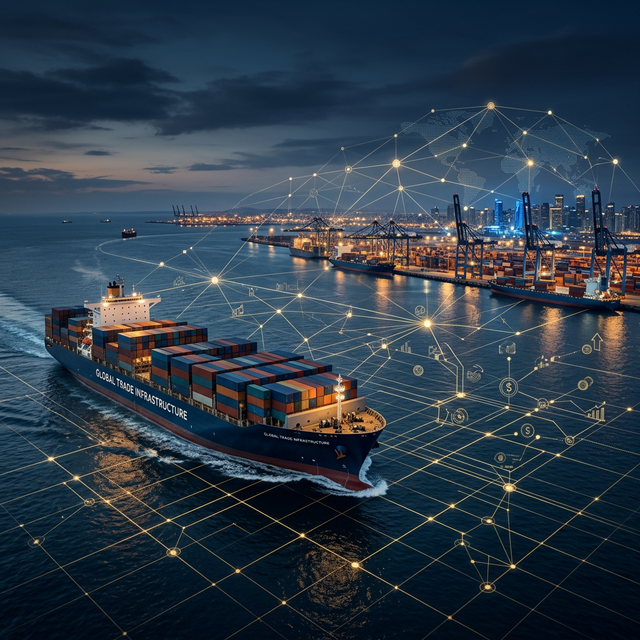
Marine insurance and reinsurance form a complex financial infrastructure supporting global trade. When geopolitical tensions rise, this system reacts immediately, often disrupting shipping long before physical supply chains are directly attacked.
For exporters, importers, and sourcing professionals, monitoring reinsurance market signals is a practical step toward maintaining resilient and cost-effective supply chains.
Taraka International helps global importers build resilient supply chains through verified Indian manufacturers across FMCG, agriculture, and industrial products. Contact our team to discuss your sourcing strategy.