Private Label Apparel and Textiles: Sourcing from India's Garment Hubs
India is one of the world's largest textile and apparel exporters, with established manufacturing clusters that have served international brands for decades. For importers, distributors, and D2C brands looking to build or expand a private-label clothing line, India offers the combination of manufacturing expertise, fabric availability, competitive pricing, and scale that few other origins can match.
This guide covers the key aspects of sourcing apparel from India, from choosing the right manufacturing cluster to managing quality control and international delivery.
India's Position in Global Textiles
India's textile industry is built on strong fundamentals:
- Cotton production: India accounts for approximately 22% of global cotton production, giving manufacturers direct access to one of the largest domestic raw material supply chains.
- Full value chain: From spinning and weaving to dyeing, printing, cutting, and stitching, India offers the complete textile manufacturing chain domestically.
- Export infrastructure: Indian textile exports reach over 100 countries, supported by established port logistics, trade agreements, and export incentive schemes.
- Labour expertise: Millions of skilled garment workers operate across specialised clusters, each with deep expertise in specific product categories.
Key Manufacturing Clusters
India's garment manufacturing is concentrated in specialised clusters, each offering distinct capabilities:
Tirupur, Tamil Nadu
Speciality: Knitwear, T-shirts, polo shirts, activewear, and casual wear.
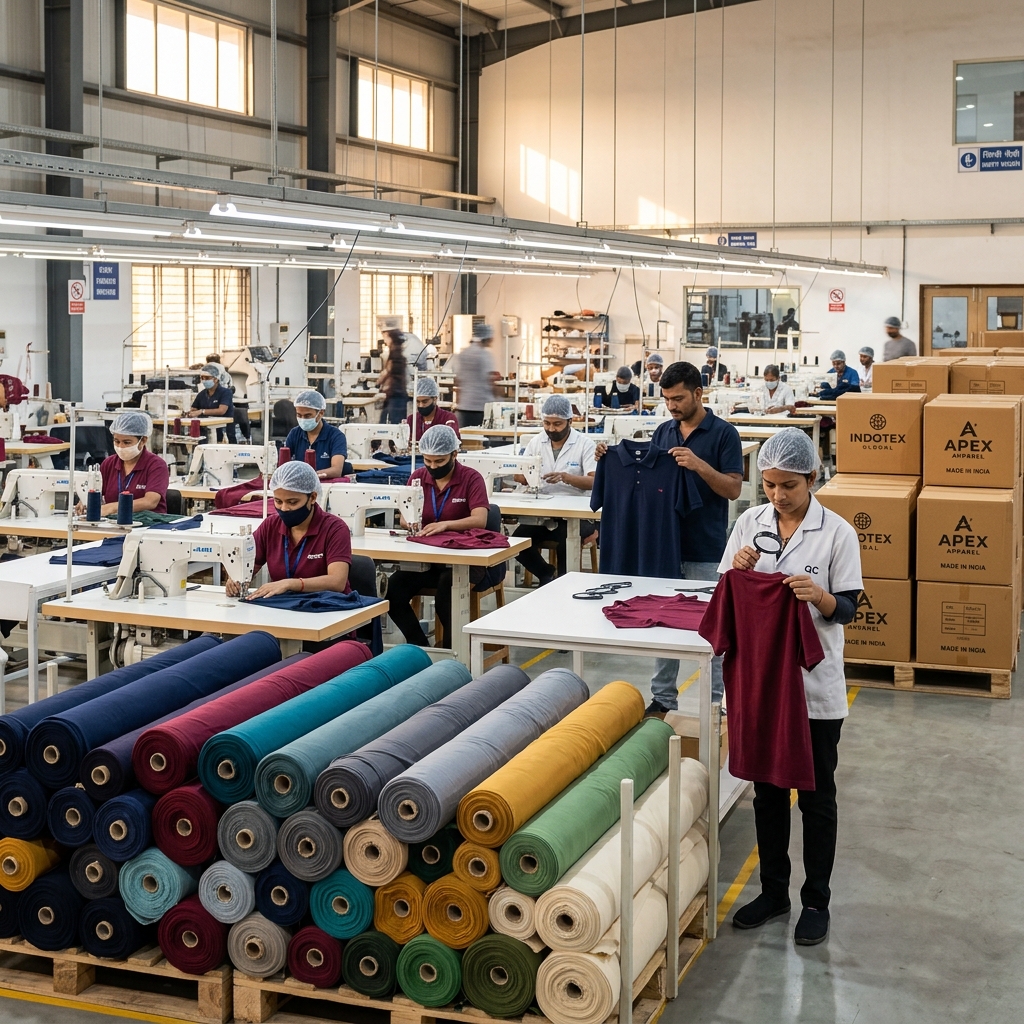
Tirupur is India's knitwear capital, producing approximately 50% of the country's cotton knitwear exports. The cluster has over 6,000 garment manufacturing units, from small workshops to large-scale factories exporting directly to European and American brands.
Strengths: High-volume production capacity, competitive pricing, established quality systems (OEKO-TEX, GOTS, BCI certifications common).
Jaipur, Rajasthan
Speciality: Block-printed fabrics, hand-dyed textiles, ethnic and bohemian apparel, home furnishings.
Jaipur's textile tradition is rooted in artisanal block printing and hand dyeing using natural dyes. The cluster produces distinctive fabrics and garments that appeal to fashion brands seeking unique, craft-based aesthetics.
Strengths: Unique artisanal techniques, natural dye capabilities, strong appeal for boutique and premium brands.
Ludhiana, Punjab
Speciality: Woollen garments, hosiery, winter wear, and athleisure.
Ludhiana is North India's primary hosiery and knitwear hub, producing everything from thermal innerwear to stylish winter jackets and sweaters.
Strengths: Cost-effective winter wear production, large domestic market serving as a quality benchmark.
Surat, Gujarat
Speciality: Synthetic and blended fabrics, sarees, dress materials, and polyester garments.
Surat's power loom sector produces vast quantities of synthetic and blended fabrics at highly competitive prices. The cluster has modernised significantly, with many mills equipped for digital printing and value-added finishing.
Strengths: High-volume synthetic fabric production, competitive pricing, quick turnaround on fashion fabrics.
Bengaluru and NCR
Speciality: Premium and export-grade garments, corporate and formal wear.
Bengaluru and the Delhi-NCR (Noida, Gurgaon) corridor house factories that serve mid-to-premium international brands. These units typically have stronger compliance infrastructure (WRAP, SEDEX, SA8000 certifications).
Strengths: Higher compliance standards, experience with international brand requirements, premium finish quality.
The Private Label Opportunity
Private-label manufacturing from India is a well-established model. Hundreds of Indian factories produce garments under their clients' brand names, handling everything from design adaptation to finished product delivery.
What Indian Manufacturers Offer
- Design and sampling: Converting your sketches or tech packs into production-ready samples. Many factories have in-house design teams that can develop collections from a brief.
- Fabric sourcing: Manufacturers source fabrics domestically or import speciality fabrics based on your specifications.
- Production: Runs typically start from 500 pieces per style per colour, though some factories accommodate smaller pilot orders.
- Quality control: Inline and final inspections against agreed specifications. AQL-based inspection protocols are standard.
- Private labelling: Custom brand labels, hang tags, packaging, and compliance labelling (care labels, fibre content labels) per destination market requirements.
Quality Certifications for Apparel
International importers should look for the following certifications when evaluating Indian textile suppliers:
| Certification | What It Covers |
|---|---|
| OEKO-TEX Standard 100 | Product safety, testing for harmful substances |
| GOTS (Global Organic Textile Standard) | Organic fibre processing, environmental and social criteria |
| BCI (Better Cotton Initiative) | Responsible cotton sourcing |
| WRAP | Social compliance in manufacturing |
| SEDEX/SMETA | Ethical trade and supply chain audit |
| SA8000 | International social accountability standard |
| ISO 9001 | Quality management system |
Taraka International verifies these certifications during the supplier vetting process and can match importers with manufacturers holding the specific certifications their market requires.
Working with Taraka for Apparel Sourcing
Taraka International manages the complete apparel sourcing cycle from India:
Step 1: Requirements and Design
Share your product specifications, design references, fabric preferences, and target pricing. Taraka's team identifies the most suitable manufacturing cluster and factory options.
Step 2: Factory Selection
Taraka presents verified factory profiles, including production capacity, certifications, client references, and pricing. You select the factory that best fits your requirements.
Step 3: Sampling
Taraka coordinates sample development with the selected factory. Samples are reviewed against your specifications, and revisions are managed until approval.
Step 4: Production
Once the sample is approved, production begins. Taraka monitors the production run at key milestones, providing progress updates and addressing any issues before they affect the final output.
Step 5: Quality Inspection
Pre-shipment inspection is conducted by Taraka's team using global quality norms. Inspection reports, including photographs and measurements, are shared with the buyer before dispatch.
Step 6: Shipping and Delivery
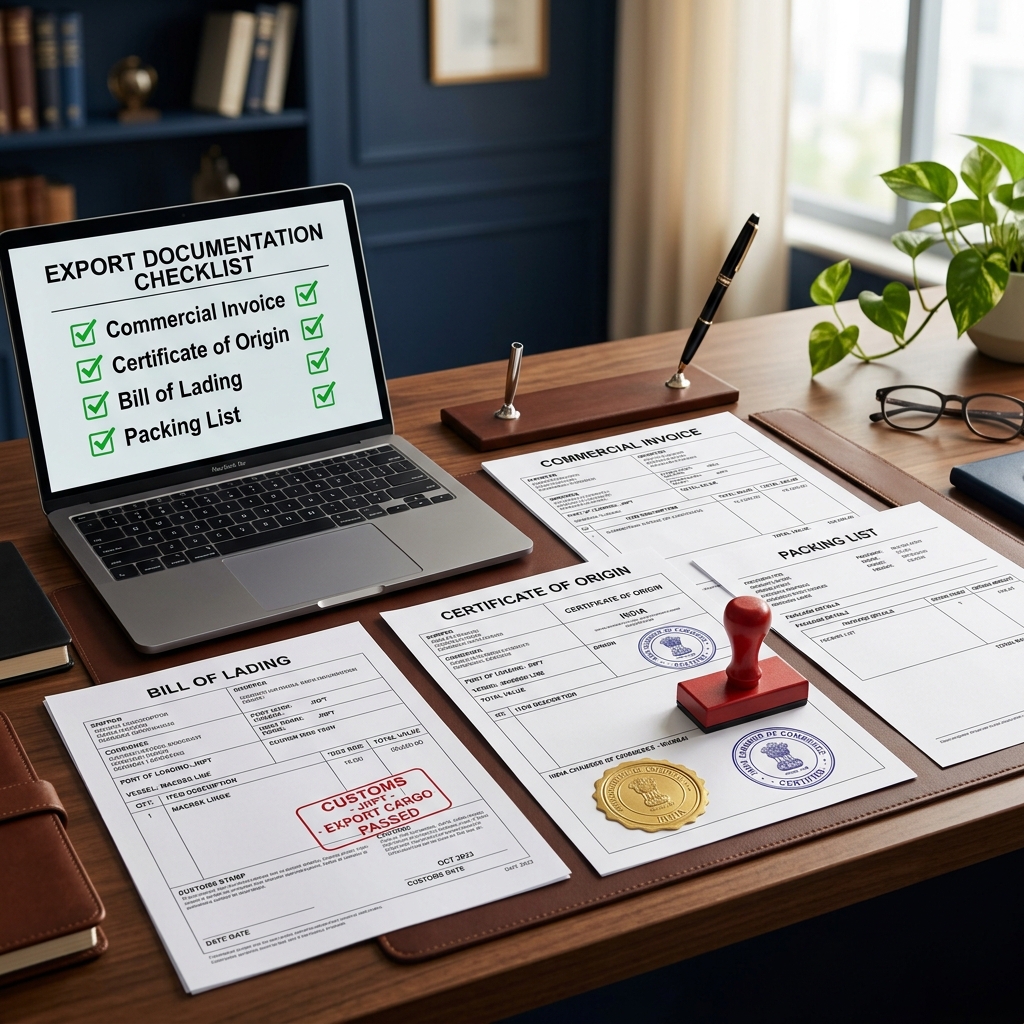
Taraka handles export documentation, customs clearance, and freight coordination. Shipments are delivered to the importer's warehouse or nominated distribution point.
Cost Considerations
Apparel sourcing from India offers competitive pricing. Several factors influence the final cost:
- Fabric type and quality: Natural fibres (cotton, silk) versus synthetics. Organic and certified fabrics carry a premium.
- Order volume: Larger orders typically achieve better per-unit pricing.
- Complexity: Embellishments, embroidery, prints, and special finishes add to the cost.
- Certifications: Certified factories may price slightly higher, reflecting their compliance investment.
- Incoterm: FOB pricing excludes freight, while CIF includes it. Discuss the best option with Taraka based on your logistics setup.
Use Cases
European fashion retailer: Sources organic cotton T-shirts and dresses through Taraka from a GOTS-certified factory in Tirupur. The retailer sells under its own brand, with all garments carrying the organic certification mark.
Middle Eastern distributor: Imports men's polo shirts and casual trousers in bulk from a Tirupur factory. Taraka manages private labelling, packaging, and CIF delivery to Jebel Ali port.
Australian D2C brand: Develops a capsule collection of block-printed linen dresses through Jaipur artisans. Taraka handles design coordination, sampling, production, and air freight for a time-sensitive launch.
Getting Started
If you are exploring apparel sourcing from India or looking to establish a reliable manufacturing partnership for your private-label line, contact Taraka International.
Share your product brief, and the team will provide a tailored proposal with factory recommendations, pricing estimates, and a production timeline within 48 hours.
Image credit: Generated by Taraka AI