How to Source Products from India Safely: Complete Guide for Importers
India is one of the world's largest manufacturing economies, exporting everything from agricultural products and textiles to pharmaceuticals and specialty chemicals. For international importers, the opportunity is significant, but so are the risks if the sourcing process is not managed properly.
This guide walks you through the complete process of sourcing products from India safely, from finding suppliers to receiving your first shipment. Whether you are a distributor in the UAE, a retailer in the United States, or a private label brand owner in Europe, these steps apply universally.
Step 1: Define Your Product Specifications Clearly
Before contacting any supplier, document your requirements in detail:
- Product type and category (raw material, semi-finished, finished goods)
- Quality standards (specific certifications like ISO, FSSAI, GMP, BRC, GOTS)
- Packaging specifications (retail-ready, bulk, private label)
- Target landed cost (including freight, duties, and insurance)
- Order volume (initial order and projected annual volume)
- Delivery timeline (production lead time plus shipping)
Vague specifications are the single largest cause of quality mismatches and disputes in international sourcing. Write everything down before you engage suppliers.
Step 2: Find and Verify Suppliers
Where to Find Indian Suppliers
- Industry trade shows (India International Trade Fair, Aero India, India Chem, Aahar)
- Online B2B platforms (IndiaMart, TradeIndia, ExportersIndia)
- Export promotion councils (APEDA, FIEO, AEPC, CAPEXIL)
- Sourcing partners like Taraka International who maintain verified manufacturer networks
How to Verify a Supplier
Finding a supplier is easy. Verifying them is where most importers fail. Here is what to check:
- Business registration. Verify GST registration, IEC (Import Export Code), and company incorporation documents.
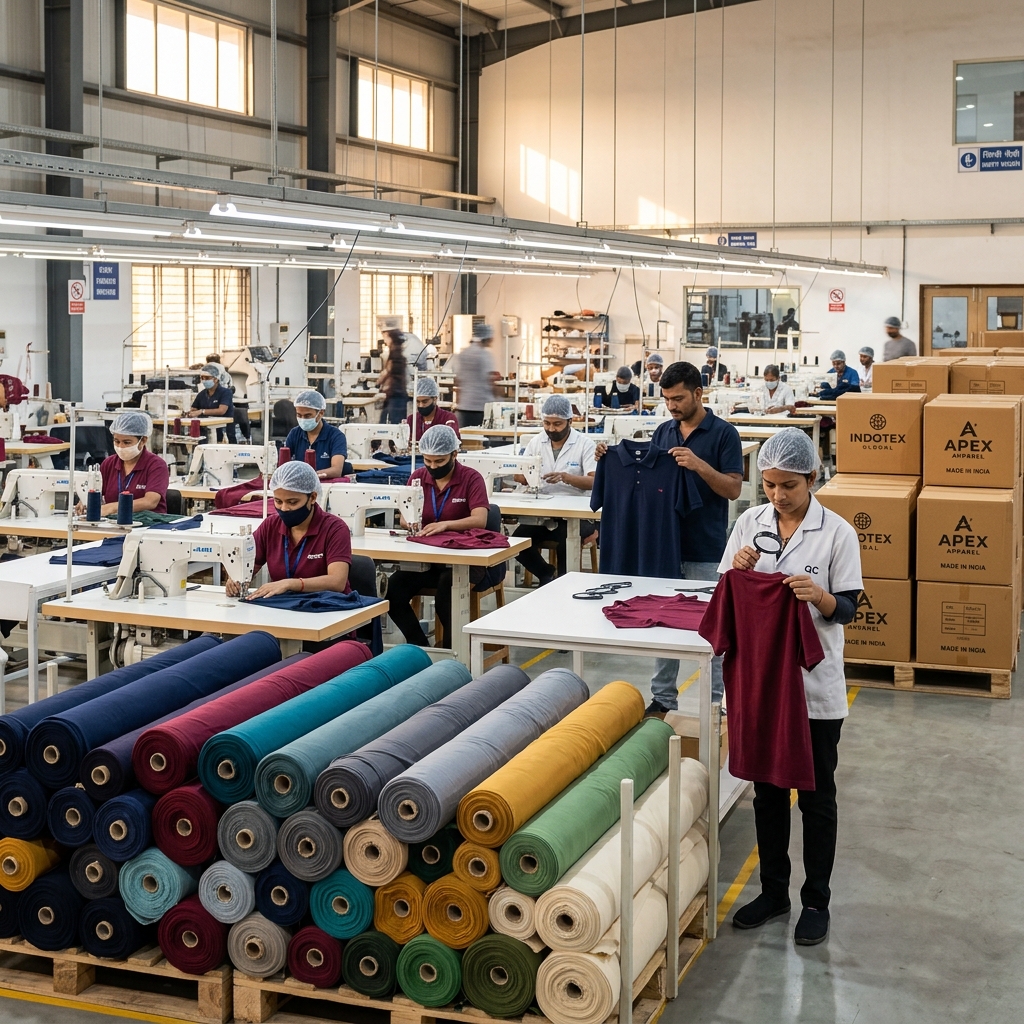
- Factory audit. Request a virtual or in-person factory visit. Check production capacity, quality control processes, and working conditions.
- Export track record. Ask for shipping records, bills of lading references, or existing buyer testimonials.
- Sample evaluation. Always order paid samples before committing to a production order. Free samples may not represent actual production quality.
- Financial stability. Check company age, annual turnover, and bank references if possible.
Step 3: Negotiate Terms and Place Your Order
Pricing
Indian manufacturers typically quote in USD or EUR for export orders. Request a detailed cost breakdown that separates product cost, packaging, and ex-factory price. This helps you compare suppliers accurately.
Incoterms
The most common Incoterms for India exports are:
- FOB (Free On Board): Supplier delivers goods to the port. You arrange and pay for shipping.
- CIF (Cost, Insurance, Freight): Supplier handles shipping and insurance to your destination port.
- EXW (Ex Works): You handle everything from the factory gate onward.
For first-time importers, FOB is often the safest starting point. You control the shipping and insurance without needing to manage inland logistics in India.
Payment Terms
- Letter of Credit (LC): The safest option for both parties. Your bank guarantees payment upon shipment.
- T/T (Telegraphic Transfer): Common for repeat buyers. Typically 30% advance, 70% against copy of bill of lading.
- Escrow services: Increasingly used for first-time transactions to build trust.
Never wire 100% payment in advance to a supplier you have not verified. This is the most common scam vector in international sourcing.
Step 4: Manage Quality Control
Quality control is not a one-time check. It should be embedded across the production cycle:
Pre-Production
- Approve a production sample (also called a pre-production sample or golden sample)
- Confirm raw material sourcing and specifications
- Agree on inspection checkpoints
During Production
- Request progress photos or videos at key milestones
- Consider a mid-production inspection for large orders
- Monitor packaging material preparation
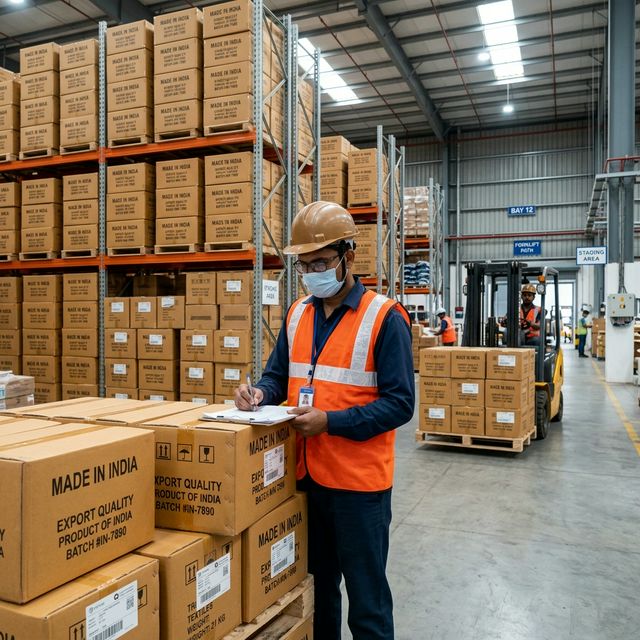
Pre-Shipment Inspection
- Hire a third-party inspection agency (SGS, Bureau Veritas, Intertek, or local agencies)
- Inspect at least according to AQL (Acceptable Quality Level) standards
- Verify labelling, packaging, and documentation before the container is sealed
Working with a sourcing coordination partner like Taraka International means quality control is managed on your behalf, with on-ground oversight throughout the production cycle.
Step 5: Handle Export Documentation
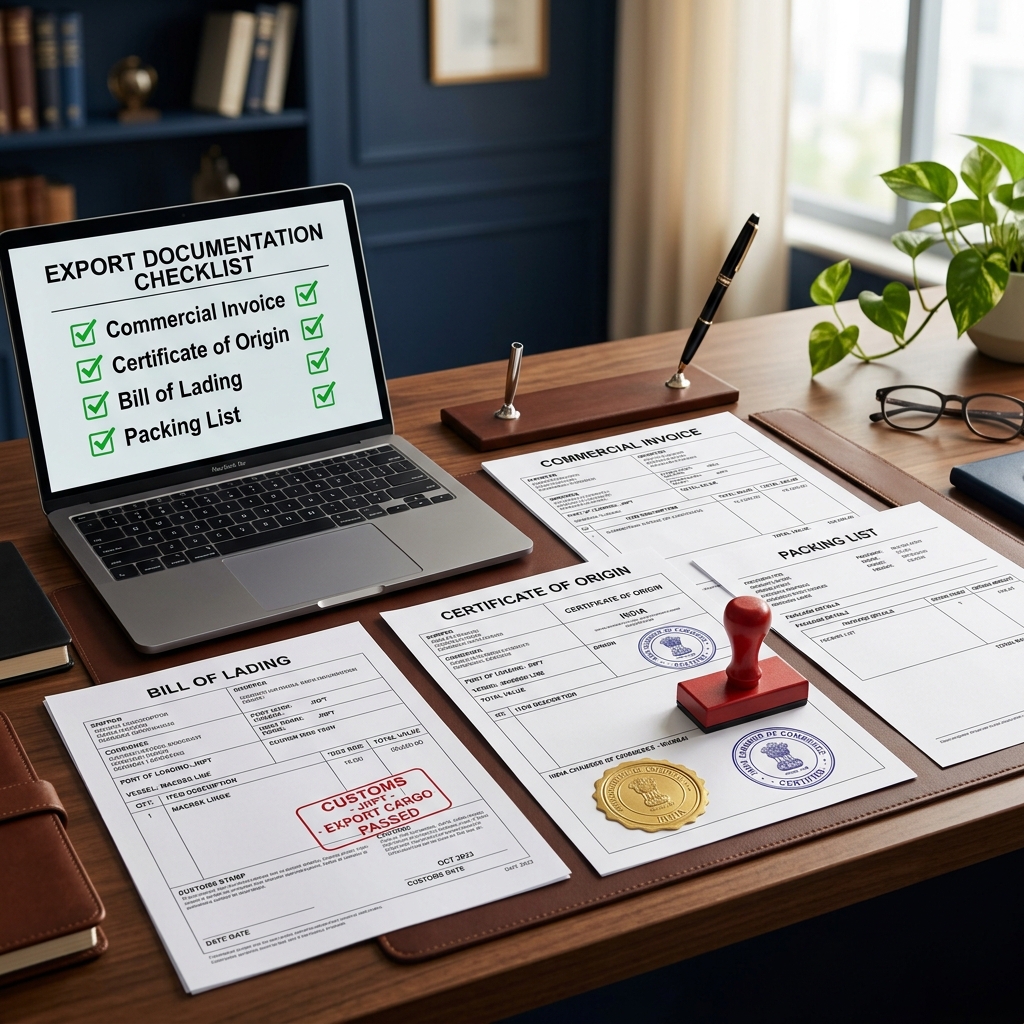
Indian export documentation follows a structured regulatory framework. Key documents include:
| Document | Purpose |
|---|---|
| Commercial Invoice | States transaction value and terms |
| Packing List | Details quantity, weight, and packaging of each item |
| Bill of Lading / Airway Bill | Proof of shipment and title document |
| Certificate of Origin | Proves goods are manufactured in India (required for preferential tariffs) |
| Phytosanitary Certificate | Required for agricultural exports |
| FSSAI Certificate | Required for food product exports |
| Test / Analysis Reports | Quality and composition certificates |
| Shipping Bill | Filed with Indian customs for export clearance |
For a detailed breakdown of every document, read our export documentation checklist.
Step 6: Plan Shipping and Logistics
Shipping Modes
- Sea freight (FCL/LCL): Most cost-effective for large volumes. Full Container Load (FCL) for high volumes, Less than Container Load (LCL) for smaller shipments.
- Air freight: For urgent, high-value, or low-weight shipments.
- Multimodal: Combination of rail, road, and sea for cost optimization.
Key Indian Export Ports
- JNPT / Nhava Sheva (Mumbai): India's busiest container port
- Mundra (Gujarat): Fastest-growing port, strong for Middle East and European routes
- Chennai: Key for Southeast Asian and East African trade
- Kolkata / Haldia: For South and Southeast Asian destinations
Transit Times (Approximate)
| Destination | Sea Freight (Days) |
|---|---|
| UAE / Gulf | 5 to 8 |
| UK / Europe | 18 to 25 |
| US East Coast | 25 to 35 |
| Australia / NZ | 14 to 20 |
Step 7: Clear Customs at Your End
Before your shipment arrives, ensure you have:
- All original documents from the supplier (bill of lading, commercial invoice, packing list, certificates)
- Your country's import license or registration (if applicable)
- Customs broker appointed at your destination port
- Duty calculations prepared based on HS code classification
Common Risks and How to Avoid Them
| Risk | Mitigation |
|---|---|
| Supplier fraud | Always verify registration, visit factory, start with small orders |
| Quality mismatch | Use pre-production samples and third-party inspections |
| Payment loss | Use LCs or escrow for first transactions |
| Documentation errors | Work with experienced exporters or coordination partners |
| Shipping delays | Build buffer time, track shipments in real time |
| Communication gaps | Use written confirmations for every decision |
For a deeper dive into failure patterns, read Top Mistakes Global Buyers Make While Importing from India.
How Taraka International Makes Sourcing from India Safer
Taraka International acts as your on-ground sourcing execution partner in India. We handle:
- Supplier shortlisting and verification across categories
- Quality control coordination with factory-level oversight
- Complete export documentation managed end-to-end
- Shipment planning and logistics coordination
- Communication bridge between you and Indian manufacturers
You focus on your market. We handle the sourcing complexity.
Ready to start? Submit your sourcing requirement or talk to our team directly.
Related reading: Why Importers Are Shifting from China to India | Top Mistakes Global Buyers Make While Importing from India