Food Import Compliance in Australia & New Zealand, Explained
A comprehensive guide to food safety, biosecurity, customs, and legislative requirements for importing food products into Trans-Tasman markets.
Table of Contents (23 sections)↓
- At a Glance
- Building the Foundation
- What Is Food Import Compliance?
- Compliance Begins Before the Shipment Leaves the Factory
- Why Food Import Compliance Matters
- Protecting Public Health
- Protecting Agriculture and the Environment
- Understanding Australia's and New Zealand's Food Import System
- The Organisations Responsible for Food Imports
- Understanding the Three Pillars of Food Import Compliance
- The Typical Food Import Journey
- Common Mistakes That Delay Food Imports
- Frequently Asked Questions
- Do all imported food products get physically inspected?
- Is food safety the same as biosecurity?
- Can the same product be imported into both Australia and New Zealand under identical rules?
- Who carries the ultimate legal responsibility for import compliance?
- What is a biosecurity import permit, and when is it required in Australia?
- What is an MPI non-registration hold in New Zealand?
- What labelling information is mandatory for food sold in Australia and New Zealand?
- How does the Trans-Tasman Mutual Recognition Arrangement (TTMRA) affect food imports?
- Sources & References
- Official Government & Regulatory Authorities
Building the Foundation for Processed Foods and Beverages Entering Trans-Tasman Markets.
At a Glance
| Objective | Details |
|---|---|
| Regulatory Framework | Every food shipment entering Australia or New Zealand must comply with food safety, biosecurity, customs, and legislative requirements before distribution. |
| Independent Border Controls | While both countries share a common food standards framework through FSANZ, they operate independent biosecurity and border clearance systems. |
| Pre-Shipment Verification | Pre-shipment ingredient verification, label audits, and supplier checks avoid costly holds, re-exports, or product destruction. |
| Importer Responsibility | Registered importers in Australia and New Zealand carry legal responsibilities including batch traceability and recall readiness. |
Building the Foundation
Importing food into Australia or New Zealand is far more than arranging international freight and clearing customs. Every shipment entering these markets must comply with a comprehensive framework of food safety, biosecurity, customs, and legislative requirements before it can be legally distributed or sold. A product that is manufactured legally in one country may still be delayed, rejected, re-exported, or destroyed if it fails to meet the importing country's regulatory requirements.
For businesses exporting Indian food and beverage products, understanding these requirements before production begins is one of the most valuable investments they can make. Compliance is not simply a regulatory obligation; it is the foundation of a resilient international supply chain. It protects consumers, safeguards agriculture and the environment, reduces commercial risk, and helps businesses build long-term relationships with distributors, retailers, and regulatory authorities.
Australia and New Zealand are recognised globally for maintaining some of the world's most rigorous food regulatory systems. While both countries share a common food standards framework through Food Standards Australia New Zealand (FSANZ), they operate independent import controls, biosecurity systems, customs procedures, and border enforcement mechanisms. Understanding how these systems work together is essential for anyone planning to import food into either market.
This guide explains the complete food import compliance journey in a practical, business-focused way. Rather than simply summarising legislation, it explains how Australia's and New Zealand's regulatory systems function in practice, why they exist, and what importers must do to move products from an overseas factory to supermarket shelves successfully.
What Is Food Import Compliance?
Food import compliance is the process of ensuring that every food product entering a country satisfies all applicable legal, food safety, biosecurity, customs, and import requirements before it reaches consumers.
Many first-time importers assume compliance begins when a shipment arrives at the destination port. In reality, compliance starts long before a container is loaded onto a vessel and continues well after the shipment has cleared the border.
A compliant food import must demonstrate that:
If any one of these requirements is overlooked, the consequences can be significant. Depending on the nature of the non-compliance, regulators may inspect the shipment, collect samples for laboratory testing, place goods on hold, require additional documentation, refuse entry, order re-export, or direct that the products be destroyed.
Compliance Begins Before the Shipment Leaves the Factory
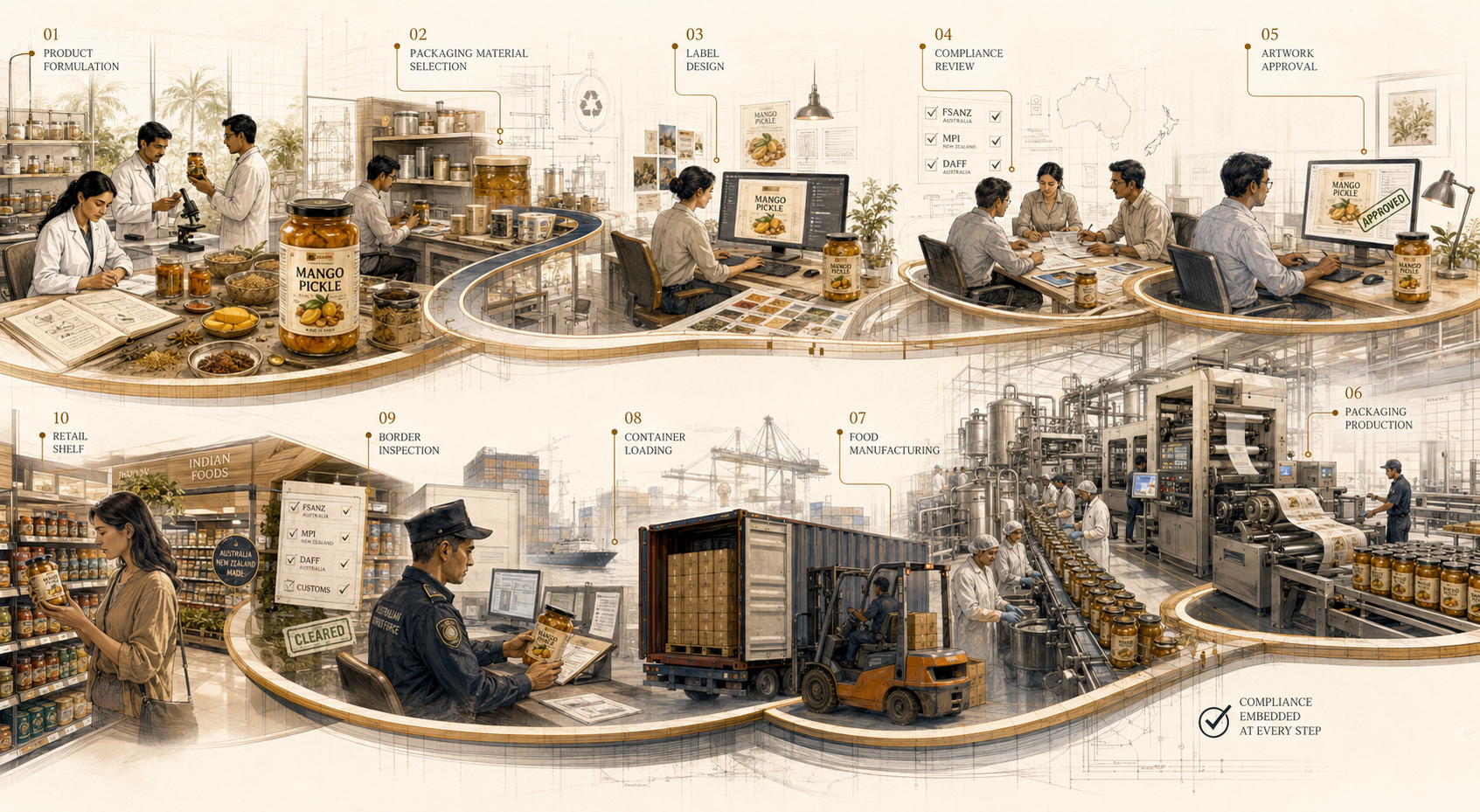
One of the most common mistakes made by new importers is assuming that compliance can be addressed once the goods arrive at the destination port. By the time a shipment reaches the border, most compliance decisions have already been made:
- The product formulation has been finalised.
- The ingredients have been sourced.
- Packaging has been printed.
- Labels have been applied.
- Export documentation has been issued.
- Shipping has been arranged.
If any of these elements fail to meet regulatory requirements, correcting them after arrival can be extremely expensive or impossible.
Why Food Import Compliance Matters
Although compliance often appears to be a collection of forms, inspections, and regulatory procedures, its purpose is much broader. Every requirement within Australia's and New Zealand's food import systems exists to achieve key public policy objectives.
Protecting Public Health
The primary objective of food regulation is ensuring that food available to consumers is safe to eat. Regulatory requirements help control hazards including harmful microorganisms, allergens, contaminants, pesticide residues, food additives, heavy metals, chemical residues, and misleading product information.
Food Standards Australia New Zealand (FSANZ) develops the Australia New Zealand Food Standards Code, which establishes common food composition, safety, contaminant, microbiological, and labelling requirements across both countries.
Protecting Agriculture and the Environment
Food safety and biosecurity are closely related but serve different purposes. A product may be perfectly safe for human consumption while still posing an unacceptable risk to domestic agriculture or native ecosystems.
Imported foods, packaging materials, seeds, untreated plant products, animal-derived ingredients, and contaminated containers can introduce invasive pests, diseases, fungi, or weeds. For this reason, New Zealand requires imported products to comply with Import Health Standards (IHS), while Australia manages import conditions through the Biosecurity Import Conditions (BICON) system administered by DAFF.
Understanding Australia's and New Zealand's Food Import System
Although Australia and New Zealand share many food standards, importing food into either country involves far more than meeting a single set of regulations. Multiple government agencies work together to assess different aspects of every shipment.
The Organisations Responsible for Food Imports
Administers Australia's biosecurity system, manages the Imported Food Inspection Scheme, conducts risk assessments, and enforces compliance for imported food.
Manages customs administration, processes import declarations, collects tariffs/GST, and enforces border movement laws.
Develops and maintains the Australia New Zealand Food Standards Code governing food composition, safety limits, allergens, and labeling rules.
Oversees food importer registration, food safety regulation, biosecurity management, Import Health Standards, and post-clearance compliance in New Zealand.
Processes import declarations, enforces customs legislation, and coordinates border release alongside MPI.
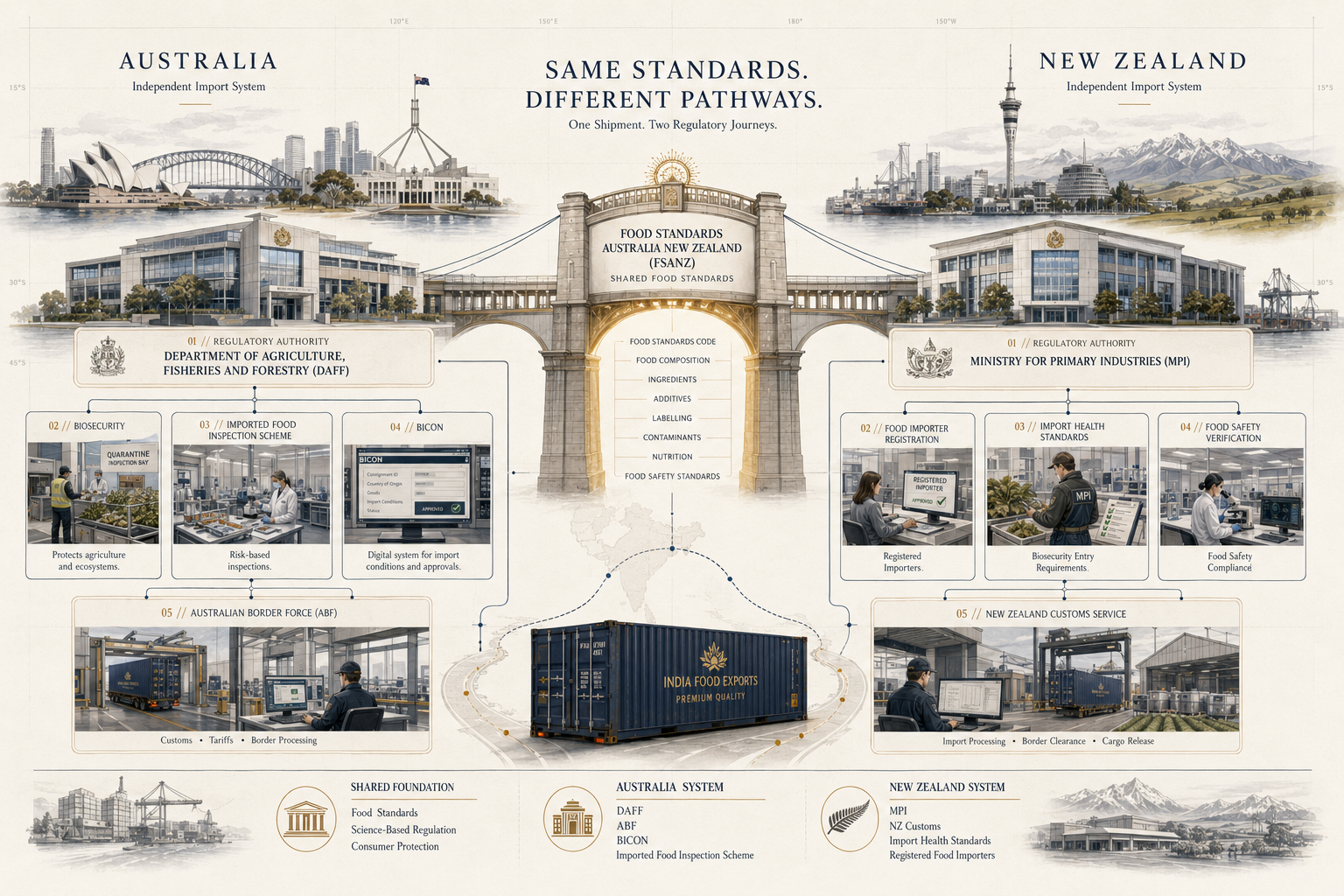
Figure 2.0: Structural comparison of food import administration between Australia (DAFF/ABF) and New Zealand (MPI/Customs).
Understanding the Three Pillars of Food Import Compliance
Every food shipment entering Australia or New Zealand is assessed through three separate regulatory lenses:
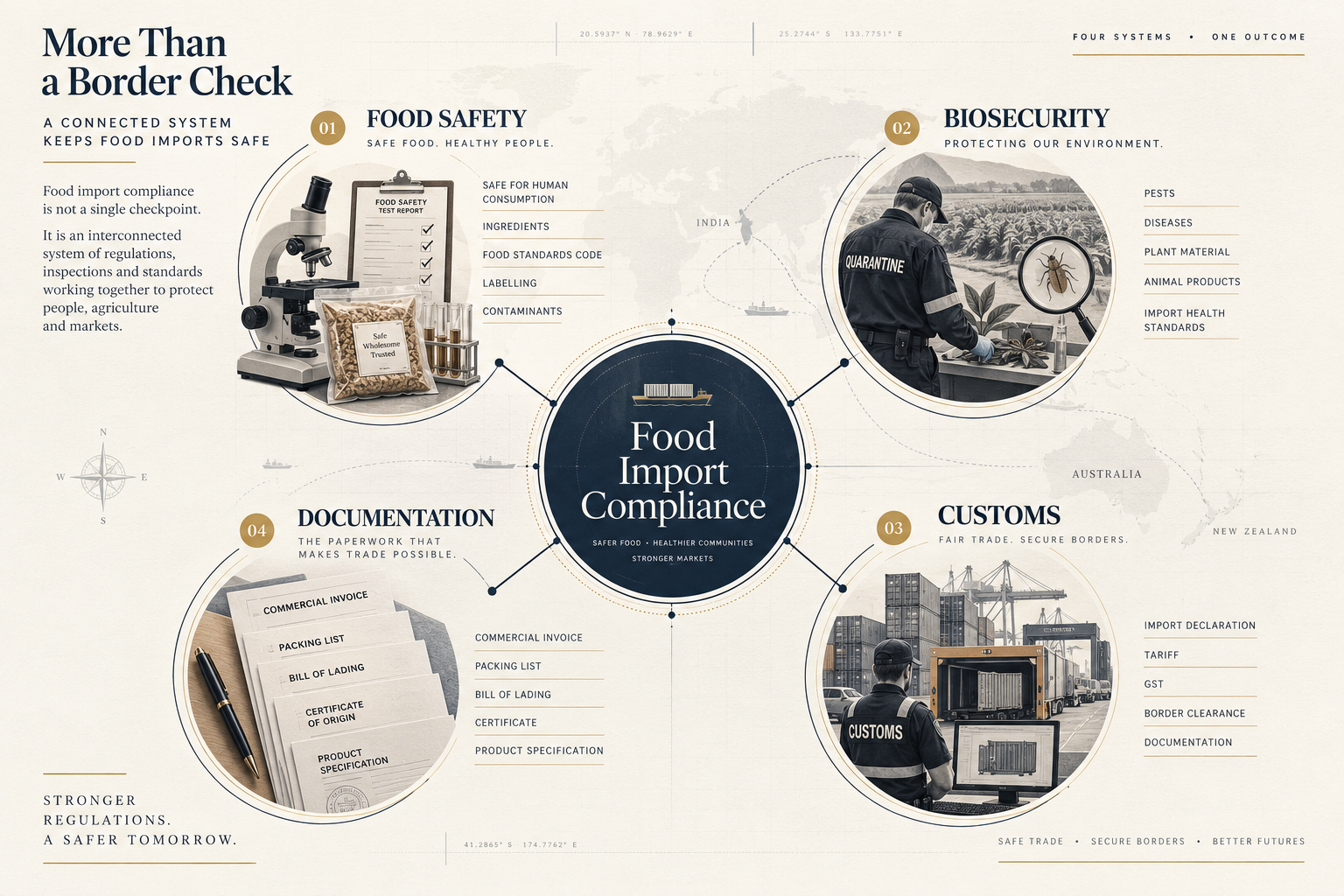
Figure 4.0: The three distinct pillars of trans-Tasman border assessment: Food Safety, Biosecurity, and Customs.
The Typical Food Import Journey
Almost every commercial food import follows six sequential stages:
Where Does Compliance Happen? Everywhere.
Initial Preparation & Verification
Execution & Compliance Review
Clearance & Final Delivery
Where Does Compliance Happen? Everywhere.
Manufacturing & Preparation
Export Readiness
International Logistics
Government & Border Compliance
Market Entry & Distribution
Common Mistakes That Delay Food Imports
The following warning signs and planning errors account for the majority of border holds: